Bellwether Q4 2025: What the findings mean for prize promotions
The IPA / S&P Global Bellwether Report is one of the most useful “temperature checks” we get on UK marketing confidence. It’s not a channel-by-channel wish list – it’s a read on where budgets are holding, where they’re being challenged, and what marketing leaders feel they can defend in the boardroom.
The January 2026 release (covering Q4 2025) points to a familiar reality: pressure is still there, and scrutiny hasn’t eased. But it also signals something important for brand teams planning 2026 campaigns- spend is gravitating toward activity that’s measurable, optimisable, and commercially accountable.
We’ve reviewed the findings specifically through the lens of prize promotions: what’s changing, what’s staying resilient, and what “good” looks like when every pound needs to prove its value.

Key Bellwether takeaways
A few themes stand out from the Q4 2025 picture, particularly when you separate the headline “Total Marketing Budgets” view from what’s happening in specific categories.
First, the report indicates UK marketing budgets were stable overall in Q4 2025. That matters because “stable” doesn’t mean “easy”- it usually means budgets are being defended, reallocated, and justified more aggressively than before.
Second, the report points to a shift away from pure advertising and toward activation- activity that can be tracked, improved in-flight, and tied more directly to commercial outcomes.
Third, some areas are showing notable momentum:
- The “Other online” advertising category rose +13.2%, the strongest growth of any category.
- PR spend increased +3.5%, marking a tenth consecutive quarter of growth.
- Events grew +1.4%, and are forecast to be the strongest area of growth for 2026/27 (+6.6%).
And crucially for this article: the report notes that sales promotions were stable in Q4, even as other areas faced decline- reinforcing promotions as a dependable commercial lever in uncertain conditions.

What this means for prize promotions
Budget pressure + the demand for provable ROI
If marketing teams are being asked to defend spend more often, the natural response is to prioritise activity that can demonstrate impact.
Prize promotions sit neatly in that space when they’re designed properly: participation is measurable, entry journeys can be optimised, and outcomes can be reported clearly (volume, conversion, CPA, incremental uplift signals, opt-ins, complaint rates, fraud rates, fulfilment SLAs). The opportunity in 2026 isn’t “should we run a promotion?”- it’s whether you can build one that stands up to scrutiny and delivers a clean performance story.
Why this matters (from a promotions/compliance perspective): when budgets tighten, poorly governed promotions don’t just underperform- they create waste. Fraud, avoidable customer complaints, and fulfilment issues quietly erode the very ROI the campaign was supposed to prove. Strong governance is performance insurance, not admin.
First-party data + opt-ins that actually hold their value
As the ecosystem continues to move away from easy third-party targeting, first-party data becomes more valuable, but also more fragile. It only works if people trust the brand enough to share their details, and if consent is handled clearly.
Prize promotions can support CRM growth, but only when the value exchange is explicit: “here’s what you get, here’s what you’re opting into, and here’s what happens next.” The report’s emphasis on commercially accountable marketing aligns with that approach- it pushes teams toward activity that creates tangible, reusable assets, not just short-term reach.
Channel mix and activation: where promotions fit best now
The areas showing resilience and growth are also the environments where promotions tend to perform strongly- particularly digitally-enabled mechanics that can be tracked end-to-end.
The growth in “Other online” (+13.2%) points to continued investment in performance environments.
In practice, these are exactly the kinds of placements where a prize promotion can deliver: you can see drop-off, test friction points, refine comms, and optimise participation while the campaign is live.
PR and Events are also telling. When PR continues to grow and Events are forecast to accelerate, it suggests marketers are looking for alternative ways to create attention and talkability. Prize promotions plug into that perfectly- turning a moment into momentum, extending beyond a physical audience, and giving people a reason to share.
Trust + scrutiny: why independent supervision is becoming non-negotiable
As promotions become more central to “performance” marketing, the standards go up. Brands want the commercial upside, but they also need protection: against fraud, against consumer disputes, and against reputational damage when something goes wrong.
That’s why audited processes, robust verification, and credible draw supervision matter more now than they did a few years ago. It’s not about adding complexity. It’s about creating certainty: that the campaign is fair, defensible, and built to withstand scrutiny.
A senior lead at PromoVeritas puts it simply:
“Independent supervision isn’t a ‘nice extra’ anymore. For major brands, it’s the difference between a promotion you can confidently scale — and one you spend weeks defending after the fact.”
At PromoVeritas, we see this operationally: the most effective campaigns combine excitement with control- clear mechanics, credible winner selection, documented processes, and fraud prevention designed in from day one.
Practical recommendations for 2026 campaigns
If you’re planning prize-led activity this year, here are the choices that consistently lift performance and reduce risk- without diluting the creative.
- Keep the mechanic simple. Every extra step costs entries. Aim for clarity in one read, even on mobile.
- Design mobile-first entry journeys. Most users will enter on a phone; friction shows up fast on smaller screens.
- Make consent clear (and genuinely worthwhile). Spell out what people get and what you’ll do with their data- then follow through.
- Choose the right “win” model for your objective. Instant win and “winning moments” can drive volume and excitement; prize draws can support brand storytelling- but both need tight governance.
- Build verification and fraud controls in early. Don’t bolt them on once anomalies appear; you’ll spend more and lose time.
- Use independently supervised draws and audited winning moments where appropriate. It protects fairness, strengthens trust, and helps brands scale with confidence.
- Plan fulfilment and comms as part of the experience. Fast, clear winner comms and reliable fulfilment reduce complaints and drop-off.
- Decide upfront what “success” looks like- and how you’ll evidence it. ROI stories land better when measurement is designed into the campaign, not retrofitted.
Common pitfalls to avoid
Even strong concepts can be undermined by avoidable execution issues. These are the problems that most often create wasted spend (or painful post-campaign clean-up):
- Overcomplicated entry journeys that feel like work, especially on mobile.
- No contingency for over-redemption or viral fraud (particularly with instant-win mechanics).
- Unclear T&Cs or mismatched messaging across pack, landing page, and paid media.
- Weak verification that allows duplicate claims, bot activity, or compromised winners.
- Siloed landing pages that don’t connect to wider CRM journeys or brand pathways.
- Poor post-campaign follow-up that wastes new opt-ins and misses the long-tail value.
Related resource
If you’re building your 2026 activation plan and want a practical guide to what’s working now — from mechanics and user journeys to verification and governance- download our report:
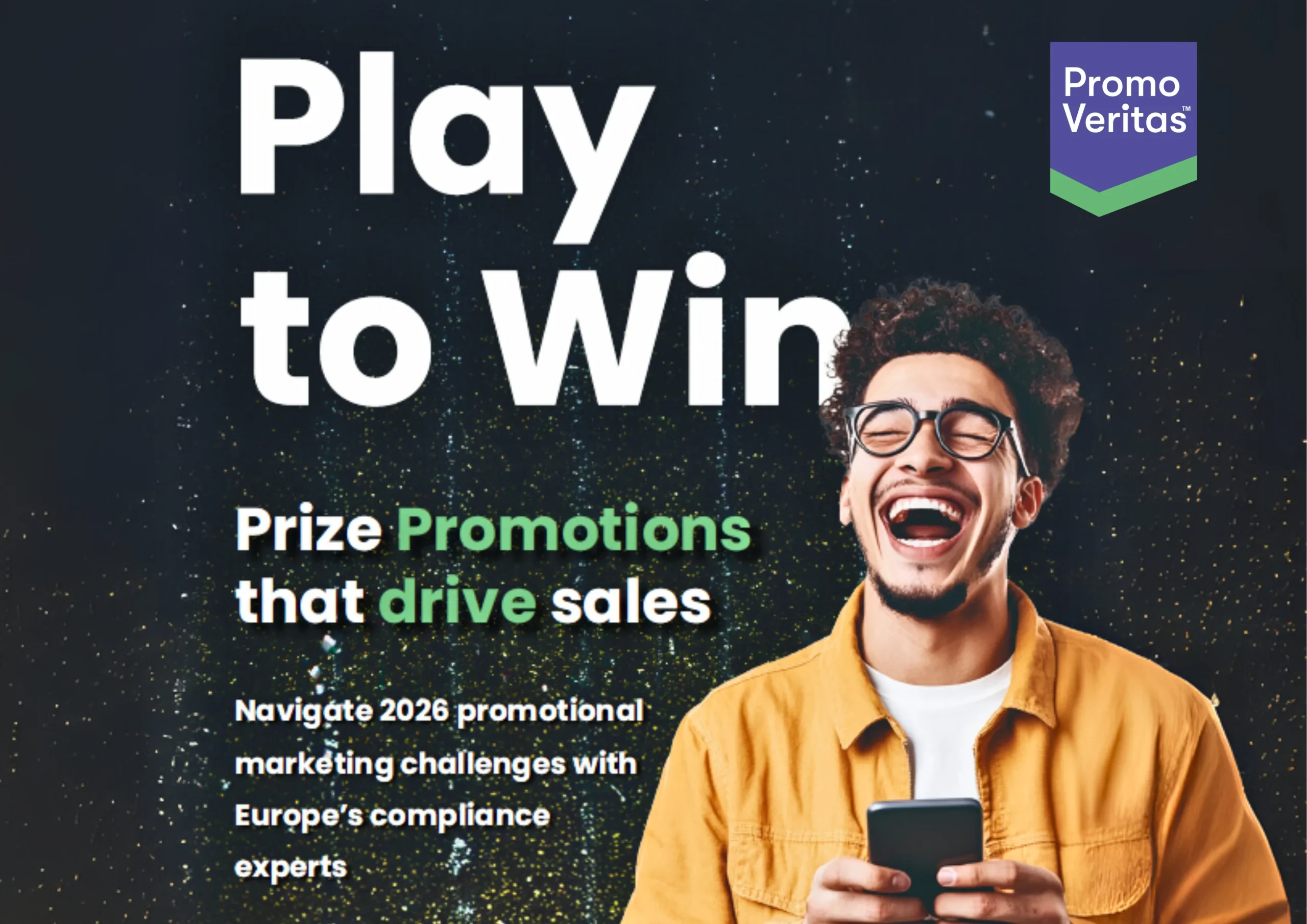
Download “Play to Win: Prize Promotions to Drive Sales”
A clear, operational look at how to run prize promotions that drive sales, build first-party data, and protect brand trust.
Prefer to talk it through? Speak to our team– we’ll pressure-test your concept, entry journey, and risk controls before you commit budget.
-
What is the Bellwether report?
-
The Bellwether Report is a quarterly survey-led view of UK marketing spend and sentiment, produced by the IPA with S&P Global. The January 2026 release covers Q4 2025.
-
-
Are prize promotions effective for first-party data?
-
They can be, if the value exchange is clear and consent is handled properly. Promotions generate opt-ins that hold value when the entry experience is trustworthy, expectations are set, and follow-up journeys are planned.
-
-
How do you run a prize promotion compliantly in the UK and ROI?
-
Start with clear terms, consistent messaging across all touchpoints, and governance that’s designed in early (verification, winner selection, audit trails, fulfilment processes). Independent supervision is often advisable for larger campaigns.
-
-
What are “winning moments” and why do they matter?
-
“Winning moments” are pre-set times when entries trigger instant wins. They can drive high participation and measurable performance, but they also require robust auditing, verification, and fraud controls to remain fair and defensible.
-
-
How do you reduce prize promotion fraud?
-
Design controls early: bot and anomaly detection, verification steps proportionate to prize value, clear rules around eligibility, and an audited process for winner selection and validation.
-